
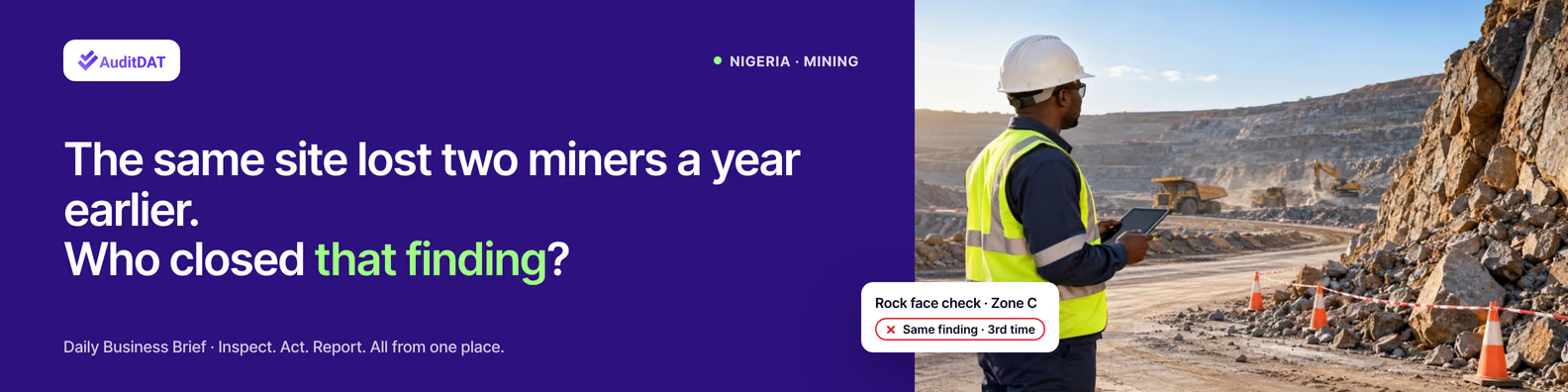
When a mine hazard comes back: the lesson from Wase
 Joseph Abeiku Ansah-Gordon
Product Owner/Lead Marketing ·
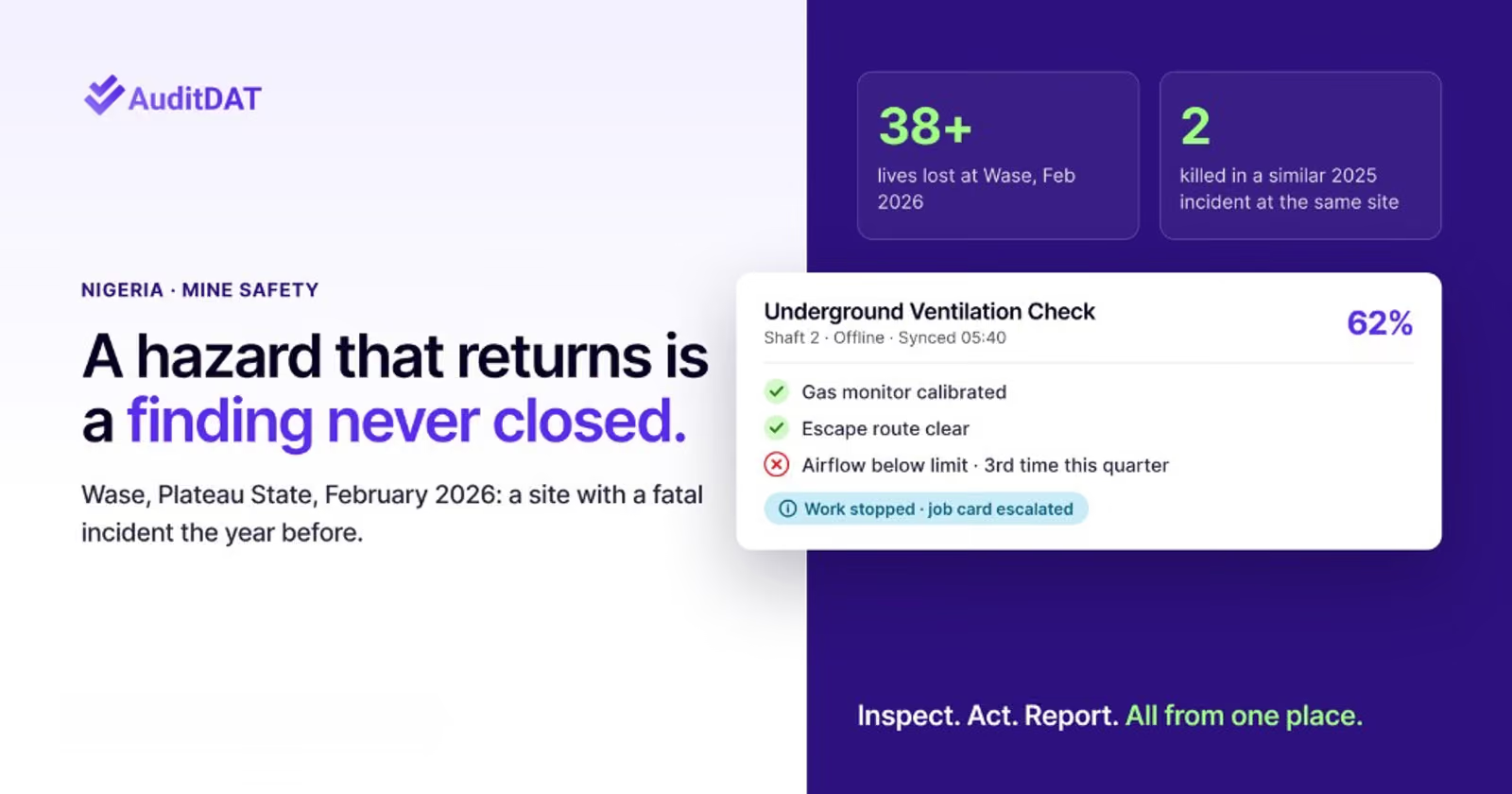
A mining site in Plateau State lost at least 38 people in February 2026. According to reports, the same site had lost two workers in a similar incident the year before. A hazard that returns is a finding that was never closed.
Share


What happened at Wase
In the early hours of a Wednesday in February 2026, miners at a lead and zinc site in Kampani Zurak, Wase Local Government Area, Plateau State, were caught in what the state government called an explosion. Daily Trust reported at least 38 dead, more than 20 injured and over 10 missing.
Eyewitnesses and a University of Jos expert pointed to carbon monoxide, a gas that builds up underground and becomes deadly without proper ventilation. One miner told reporters it was "a type of gas that often builds up during mining activities".
The most troubling detail came from local sources: a similar incident at the same site in 2025 had killed two people. The federal Minister of Environment ordered all mining in the area shut down pending investigation. An environmental campaigner said the deaths "could have been avoided if basic safety measures had been enforced".
A pattern, not a one-off
Wase was not an isolated case. Other reported incidents this year include:
| Date (2026) | Location | What was reported |
|---|---|---|
| September | Mayo Kam, Bali LGA, Taraba State | Pit collapse; about 20 people feared trapped |
| February | Kampani Zurak, Wase LGA, Plateau State | Suspected gas incident; at least 38 dead |
| February | Ebonyi State | Pit collapse; 3 killed, 4 injured |
The sector is growing fast. The Ministry of Solid Minerals Development says revenue rose from N16 billion in 2023 to a projected N70 billion-plus in 2025, helped by licence clean-ups and the new mining marshals. Oversight has not kept pace. The Miners Association of Nigeria has warned that Niger State, roughly the size of five other states, had a single federal mines officer with almost no field staff.
Why repeat hazards survive inspection
Much of Nigeria's mining is artisanal or informal, and illegal pits will always be hard to police. But a recurring hazard at a long-running operation points to a different failure. The problem was seen, and then nothing changed. That is a corrective-action failure, not an inspection failure.
It usually happens in one of four ways:
- The finding is noted, not assigned. "Poor ventilation in shaft 2" appears on a sheet, but nobody owns the fix or a deadline.
- Each inspection starts from zero. Paper forms don't show what was found last time, so the third sighting of the same hazard looks like the first.
- Temporary fixes become permanent. A fan is moved or a barrier taped off, the item is ticked as "addressed", and the root cause stays.
- Nobody sees the trend. Without records in one place, managers cannot see that the same pit, shaft or bench keeps failing the same check.
When a hazard shows up three times, it stops being a risk and becomes part of how the site operates. On an underground site, a recurring gas or ground-control finding is a warning that should stop work.
How can AuditDAT make a difference
AuditDAT by UPDAT makes repeat hazards visible, and makes sure someone owns the fix. Inspect. Act. Report. All from one place.
- See the history before you start. Every inspection of a pit, shaft or bench is stored against that location, so supervisors can see what was found last time and whether it was fixed.
- A fail becomes a job card. A failed check, such as ventilation, gas readings, ground support or pit-wall stability, becomes an action with a named owner and a due date. It stays open until it is closed with evidence.
- Spot the repeat offenders. Filter actions by site, location or status to see which hazards keep coming back.
- Do the check underground, with no signal. AuditDAT works offline on a phone and syncs once the crew is back on surface.
- Prove it with photos. Annotated photos and signatures sit inside the record, ready for mines officers, insurers and community engagement.
- Know who is underground. UPDAT's TimeDAT adds location-verified clock-ins and lone-worker support.
Nigeria's regulators are stretched thin. Operators who can show a clean record of hazards found, fixed and verified will stand out, and so will the lives that record protects.
FAQ
Questions on this note
Why does the same mine hazard come back?
The finding was seen and never closed. A failed check needs an owner and a due date, and it stays open until it is closed with evidence.
What was reported at Wase in February 2026?
Daily Trust reported at least 38 people dead at a lead and zinc site in Kampani Zurak, Wase, Plateau State. Local sources said a similar incident at the same site in 2025 killed two people.
How do you stop the same pit hazard being found again?
Keep the last inspection on that pit, shaft or bench. In AuditDAT a failed check becomes a job card and stays open until it is closed with photos, so the next check starts from what was already found.
Can an underground check be done with no signal?
Yes. AuditDAT works offline on a phone. Answers, photos and signatures sync when the crew is back on surface.
Free with your demo
Send us 5 checklists
Send five inspection forms your team uses today, as PDF, Excel or Word files, or a photo of the paper form. We build them in AuditDAT and show you the product running your own process.
- Up to 5 checklists, as they are used on site today
- We set up scoring, photos and signatures for you
- Your demo uses your inspections, not a sample tour
Bring your forms as PDF · Word · Excel · photo of paper

Included when you book a demo. No extra fees.
-

1 You send paper or Excel forms
-
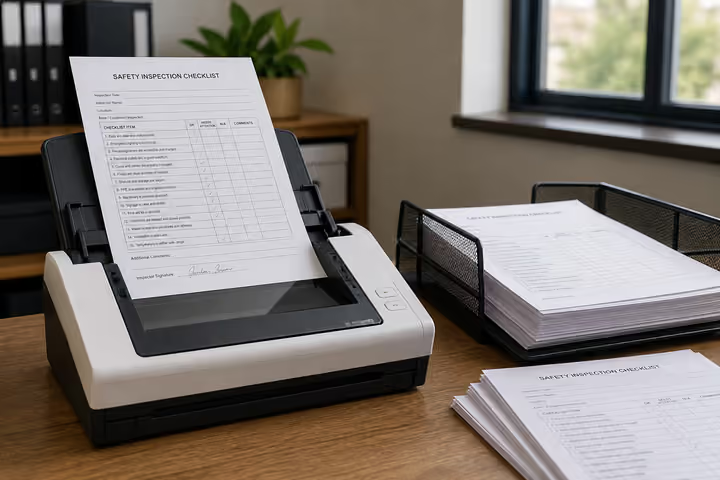
2 We convert them into AuditDAT
-

3 Your demo uses your inspections